Desk Exercises You Can Do While Working
The best desk exercises move the parts of you that sitting keeps still: neck, shoulders, upper back, wrists, hips and legs. A mix of mobility, light activation and standing up beats stretching alone, and three minutes is enough to notice.
Try the guided version
3-Minute Desk Reset
No equipment. No signup. Timed, cued and illustrated.
Best desk exercises
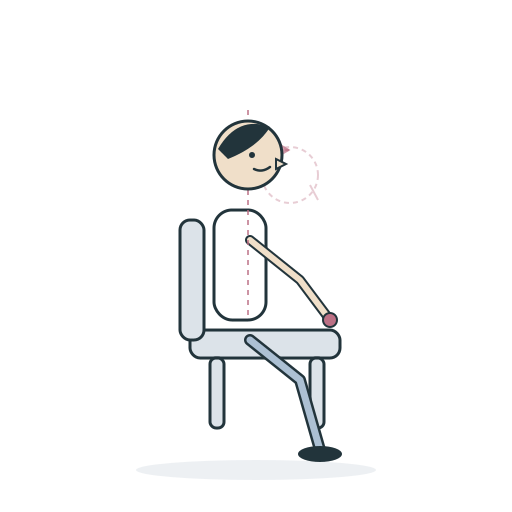
1. Chin tuck
Slide your chin straight back (make a soft double chin). Keep eyes level, don’t tip the nose down.
Feel it: the back of your neck lengthening
Common mistake: Tipping the head up or down instead of sliding straight back.

2. Shoulder rolls
Slow shoulder circles, lift, roll back, drop, then forward. Keep the neck easy.
Feel it: your shoulders travelling through their full circle
Common mistake: Rushing or crunching the neck.

3. Seated scap squeeze
Sitting tall, draw your shoulder blades together and slightly down. Hold briefly, then release. Don’t shrug up toward your ears.
Feel it: the muscles between your shoulder blades switching on
Common mistake: Shrugging shoulders up toward the ears.

4. Wrist circles
Make a loose fist or open hand and circle the wrist slowly one way, then the other.
Feel it: your wrists loosening in both directions
Common mistake: Forcing through sharp pain.
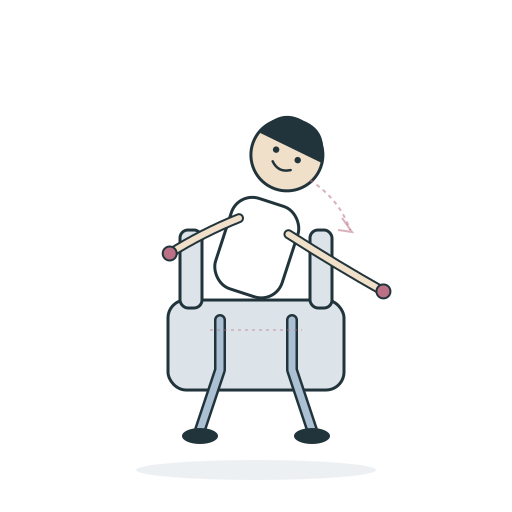
5. Seated thoracic rotation
Sit tall with feet planted. Rotate the mid-back to look over one shoulder, then the other. Keep the hips quiet, don’t twist from the low back.
Feel it: an easy twist through your mid-back
Common mistake: Twisting from the low back or yanking with the arms.

6. Seated figure-4
Sit tall. Cross one ankle over the opposite knee. Hinge a little forward from the hips until you feel a stretch in the outer hip, stop before sharp pain.
Feel it: the outside of your hip and glute
Common mistake: Pressing down on the bent knee.

7. Calf raise
Stand holding the desk if needed. Rise onto the balls of both feet, pause, then lower slowly.
Feel it: your calves working and your blood moving
Common mistake: Bouncing at the top.

8. Short walk
Walk away from your desk. To the far end of the room, a window, or the kitchen and back.
Feel it: your legs and hips loosening as you go
Common mistake: Taking your phone and standing still with it.
Why movement breaks matter
Sitting is not dangerous in itself. Sitting without moving for hours is what stiffens necks and low backs and drains the afternoon. Interrupting long sits with short bouts of movement is one of the best-evidenced things a desk worker can do, and it works better when it happens often rather than for long.
How often should you move?
There is no single right number. Most guidance for office workers points toward a change of position every 30 to 60 minutes and a few short movement breaks across the day. If that sounds like a lot, one reset in the afternoon slump is a real start.
Mobility, activation, and getting up
Stretching feels good but changes little on its own. A good desk routine also wakes up muscles that switch off in a chair, like the upper back and glutes, and gets you on your feet for a moment. That is what DeskBreak's Desk Reset does, in order.
Try the guided version
Start DeskBreak. No equipment, no signup.