
Neck and Shoulder Exercises for Desk Workers
A screen tends to pull the head forward and the shoulders up. Chasing a perfect posture isn't the answer. Moving often, plus a little strengthening for the upper back, is what the research points to (Louw et al., 2017).
Try the guided version
3-Minute Neck + Shoulder Reset
No equipment. No signup. Timed, cued and illustrated.
Best neck and shoulder exercises
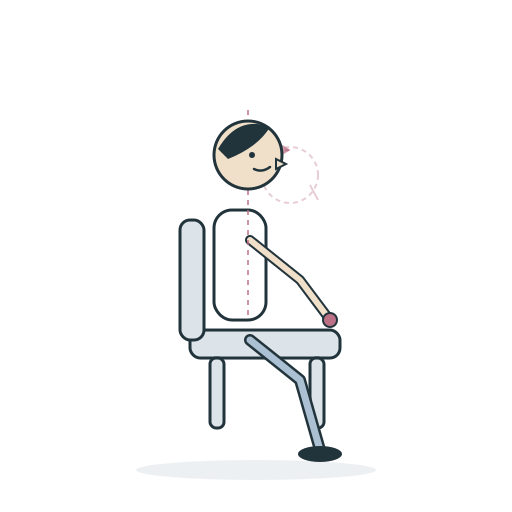
1. Chin tuck
Slide your chin straight back (make a soft double chin) and hold for 2 seconds. Keep eyes level, don’t tip the nose down.
Feel it: the back of your neck lengthening
Common mistake: Tipping the head up or down instead of sliding straight back.
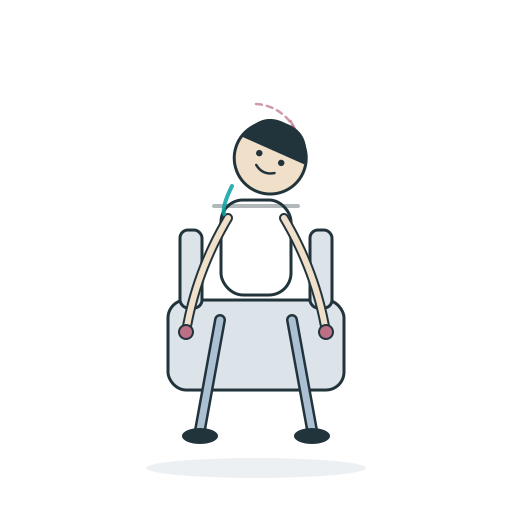
2. Neck side stretch
Sit tall, hold the chair seat with your left hand. Tip your right ear toward your right shoulder until the left side of your neck feels long. Hand on head only if you want, resting, not pulling. Switch sides at the chime.
Feel it: a stretch down the side of your neck
Common mistake: Pulling on the head, or turning the chin as you tip.
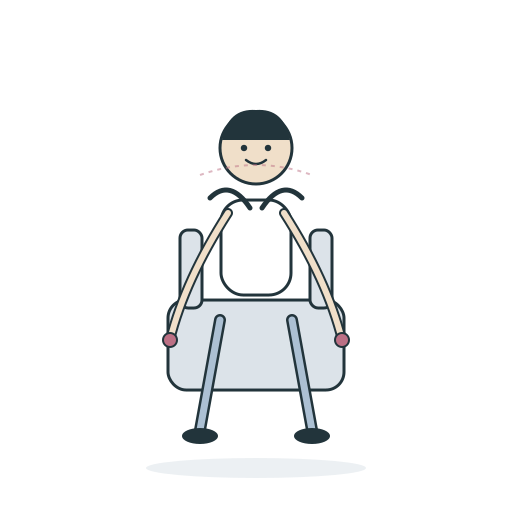
3. Shoulder rolls
Slow shoulder circles, mostly backward: lift, roll back, drop. Add a few forward at the end. Keep the neck easy.
Feel it: your shoulders travelling through their full circle
Common mistake: Rushing or crunching the neck.
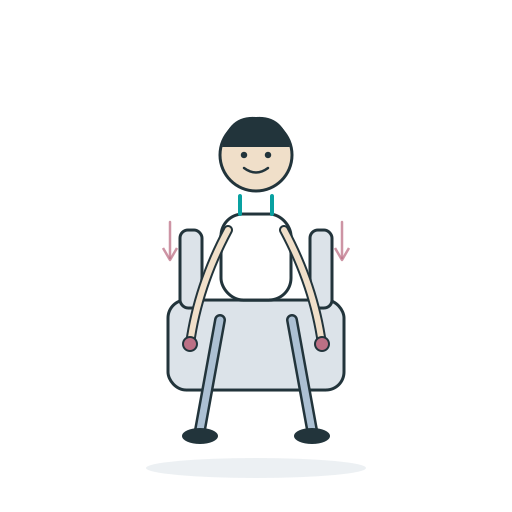
4. Unshrug
Lift your shoulders toward your ears, hold for 2 seconds, then let them drop and slide down away from your ears. Breathe out as they drop.
Feel it: the tops of your shoulders letting go as they drop
Common mistake: Holding your breath, or shrugging so hard the neck strains.
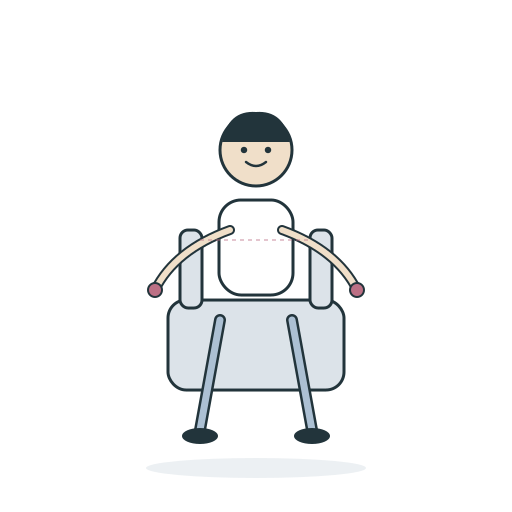
5. Seated scap squeeze
Sitting tall, draw your shoulder blades together and slightly down. Hold briefly, then release. Don’t shrug up toward your ears.
Feel it: the muscles between your shoulder blades switching on
Common mistake: Shrugging shoulders up toward the ears.
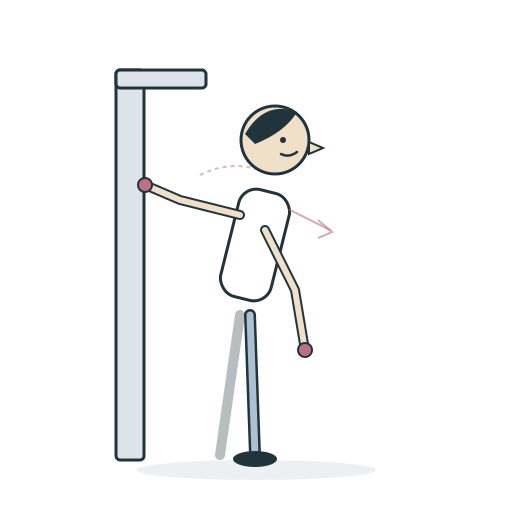
6. Doorway or wall chest opener
Stand in a doorway or beside a wall. Place a forearm on the frame, elbow at or below shoulder height. Step through with the same-side foot and gently turn your chest away until you feel a stretch across the front of the shoulder and chest. Stop if the front of the shoulder pinches or the arm tingles.
Feel it: the front of your chest and shoulder opening
Common mistake: Leaning so hard the front of the shoulder hurts.
Mobility first, then activation
Gentle neck movement and shoulder rolls take the joints through ranges a desk rarely asks for. Then squeezing the shoulder blades gives the upper back some work, which it doesn't get much of when the arms live in front of the body all day.
Go slowly
A neck exercise should feel like length and movement, never a pinch. If anything shoots or tingles into an arm, stop that move and skip it.
Little and often
Small amounts add up: in one trial, 2 minutes a day of shoulder exercise with an elastic band reduced neck and shoulder pain about as much as 12 minutes a day (Andersen et al., 2011). DeskBreak's no-equipment moves are a lighter version of that idea, and short breaks are easier to repeat.