Posture Reset: Change Positions, Not Chase a Perfect One
The best posture is the next one. There is little evidence that one 'correct' sitting posture prevents pain; in trials with office workers, active breaks that involved changing position were linked to less reported discomfort (Waongenngarm et al., 2018; Waongenngarm et al., 2021). A posture reset is three minutes of doing exactly that.
Try the guided version
3-Minute Posture Reset
No equipment. No signup. Timed, cued and illustrated.
Posture reset moves
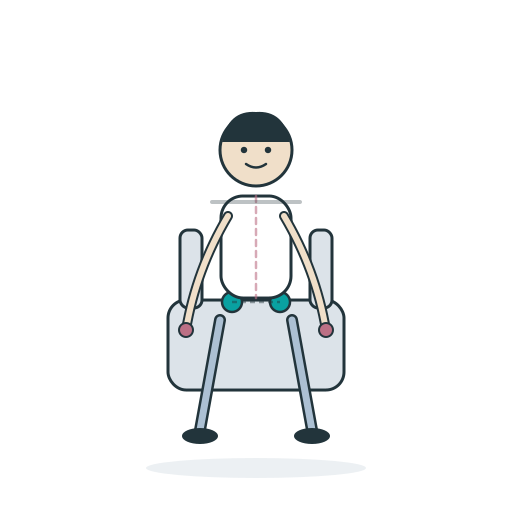
1. Sit bones find
Sit and rock gently side to side and front to back until you feel both sit bones on the chair, then sit tall balanced on them.
Feel it: your weight land evenly on both sit bones
Common mistake: Perching on the tailbone or slumping off the sit bones.
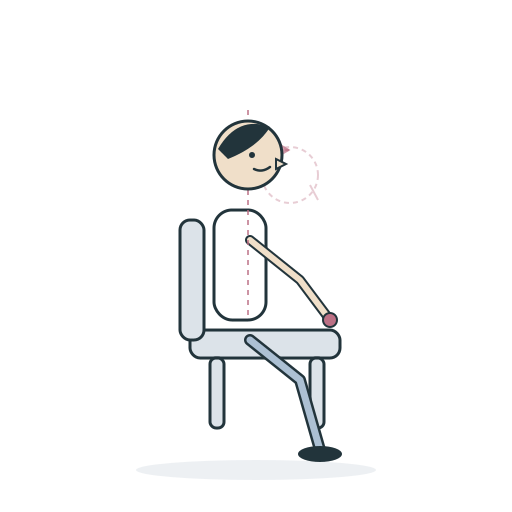
2. Chin tuck
Slide your chin straight back (make a soft double chin) and hold for 2 seconds. Keep eyes level, don’t tip the nose down.
Feel it: the back of your neck lengthening
Common mistake: Tipping the head up or down instead of sliding straight back.
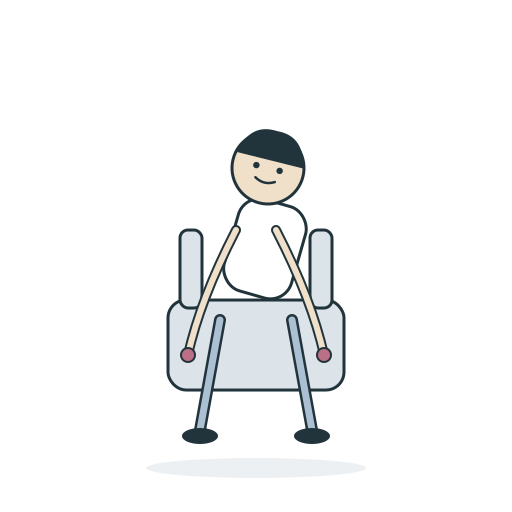
3. Seated cat-cow
Sitting, breathe out as you round your mid-back and tuck the chin slightly (cat), then breathe in as you lift the chest and look forward (cow). Move slow.
Feel it: your spine moving one segment at a time
Common mistake: Rushing or forcing end range.
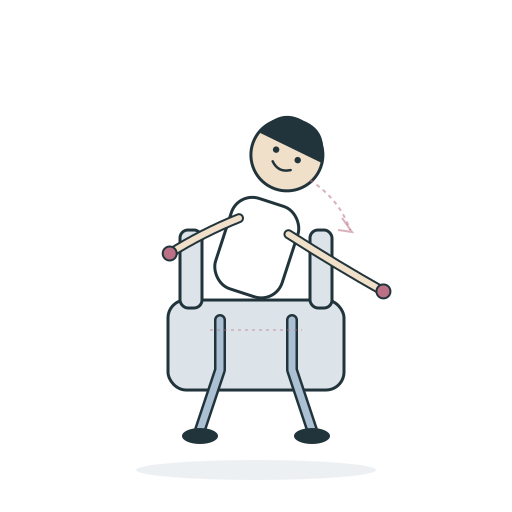
4. Seated thoracic rotation
Sit tall with feet planted and arms crossed over your chest. Turn your mid-back to look over one shoulder, then the other. Keep the hips quiet; don't twist from the low back. Swivel chair? Keep your feet planted so the seat doesn't turn.
Feel it: an easy twist through your mid-back
Common mistake: Twisting from the low back or yanking with the arms.
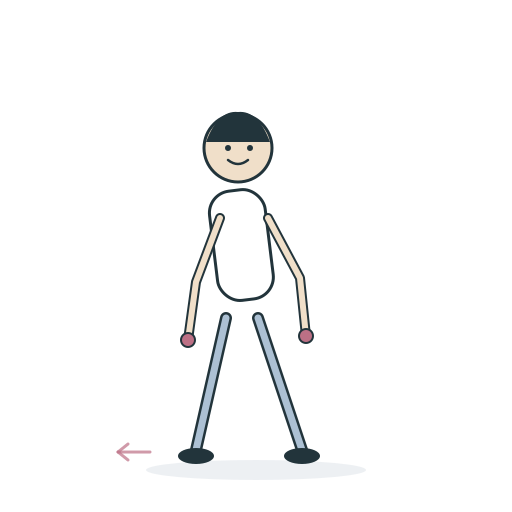
5. Stand and shift
Stand up. Shift your weight slowly from one foot to the other, letting your hips and shoulders move with it.
Feel it: your weight moving through your feet and hips
Common mistake: Locking your knees and standing rigidly still.
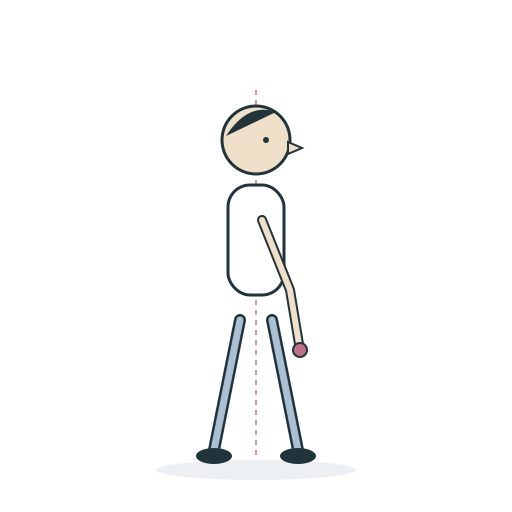
6. Stand tall and breathe
Stand up. Feel your feet on the floor, soften your knees and let your head float up. Breathe easily.
Feel it: your weight settling through your feet
Common mistake: Locking the knees or holding yourself stiff.
Why not just sit up straight?
Sitting up straight is fine. So is leaning back, perching forward, or standing for a while. The trouble is staying in any one of them for hours. DeskBreak never tells you to hold a pose; it tells you to sit differently, and to get up. How DeskBreak uses the research.
What a posture reset does
It walks you through a few different positions: finding your sit bones, sliding the chin back, rounding and arching the spine, turning through the upper back, then standing and shifting your weight. When you sit back down, you sit down somewhere new.
How often
Official guidance doesn't set an interval (Bull et al., 2020). Studies of desk workers have often tested breaks every 20 to 30 minutes (McLean et al., 2001; Shrestha et al., 2018). Start with the number you'll actually do, and add more once it's a habit.